Why Vision Loss Is Difficult to Repair
The visual system is highly specialized and tightly integrated. Damage to one part often affects the whole process of seeing, from light detection in the eye to signal processing in the brain. Unlike skin or blood, many visual tissues have limited natural capacity to regenerate.
For much of modern medical history, vision loss caused by retinal degeneration or nerve damage was considered irreversible. Stem cell research has challenged that assumption by offering new ways to study repair at the cellular level.
The Complexity of the Retina
The retina is a layered structure made up of several types of cells, each with a specific role. Photoreceptors detect light. Other neurons process and transmit signals. Supporting cells maintain structure and chemical balance.
Replacing one cell type is not enough. Any attempt at repair must consider how new cells integrate into this existing network and form functional connections.
Limits of Natural Regeneration
Some animals can regenerate parts of their visual system, but humans have very limited ability to do so. Retinal neurons and optic nerve cells do not readily regrow once damaged.
This biological constraint is one reason why stem cells have attracted attention as a possible research tool for regeneration.
What Stem Cells Offer to Vision Science
Stem cells are defined by their ability to develop into different types of specialized cells. In vision research, they provide a way to study how retinal cells form, mature, and interact.
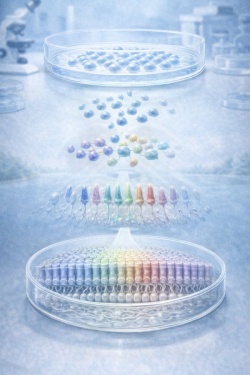
Rather than acting as a direct treatment, stem cells often serve as experimental models that help researchers understand underlying mechanisms of disease and repair.
Types of Stem Cells Used in Research
Several types of stem cells are studied in vision science. Embryonic stem cells can develop into many cell types. Induced pluripotent stem cells are created by reprogramming adult cells to a flexible state.
Each type has advantages and limitations. Some are easier to control in laboratory settings, while others reduce ethical or immune compatibility concerns.
Growing Retinal Cells in the Lab
Researchers have learned how to guide stem cells into becoming retinal cells under controlled conditions. In some cases, these cells organize themselves into layered structures resembling early retinal tissue.
These laboratory models allow scientists to observe development, test drugs, and study disease progression without relying solely on animal models.
Repair Versus Replacement Approaches
Scientific strategies for vision restoration generally fall into two categories. One aims to replace lost or damaged cells. The other focuses on supporting remaining cells and slowing further degeneration.
Stem cell research contributes to both approaches, though neither is straightforward.
Cell Replacement Strategies
In replacement research, the goal is to introduce new cells that can take over the function of damaged ones. For vision, this often involves photoreceptors or retinal pigment cells.
A major challenge lies in ensuring that transplanted cells survive, connect correctly, and respond to light in a meaningful way.
Supporting Existing Visual Cells
Some studies explore how stem cells might release supportive factors that help existing retinal cells survive longer. This approach does not replace lost vision but may help preserve remaining function.
Such strategies reflect a broader shift toward slowing progression rather than reversing damage outright.
Current Research Challenges
Despite progress, many obstacles remain. Vision restoration involves more than producing the right cells. It requires precise timing, placement, and integration within complex neural circuits.
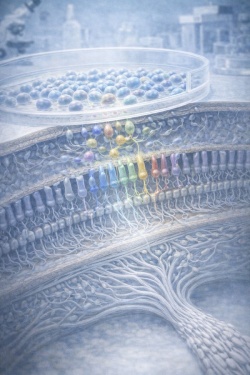
Researchers proceed cautiously, aware that small errors at the cellular level can have large consequences.
Integration and Connectivity
For vision to work, new cells must form accurate connections with surrounding neurons and transmit signals to the brain. Achieving this level of integration remains one of the most difficult challenges.
Even if cells survive transplantation, functional vision may not follow.
Safety and Long Term Stability
Another concern is safety. Stem cells that divide uncontrollably or differentiate incorrectly pose serious risks. Long term monitoring is essential to understand how transplanted cells behave over time.
These concerns shape the pace and design of ongoing research.
A Field Defined by Careful Progress
The scientific endeavors towards vision reconstitution or repair by stem cells have become notable for patience versus promise. This is a process of understanding, building models, and attempting the areas of biological plausibilities with extreme caution. Though full restoration of vision is complex, every advancement broadens the view of how the prototype of a visual system might one day be maintained, protected, or partly rebuilt.
Quick Links
Have you ever stopped to really look at an eye?
— James Lucas (@JamesLucasIT) January 16, 2026
Most of us just glance at them without thinking. But up close, the human eye is astonishing.
This photograph by Suren Manvelyan shows the iris like you’ve never seen it before. The iris isn’t just color. It’s a landscape of folds… pic.twitter.com/KDqBJyMwmm